You’ve just bought an espresso machine. You already have a coffee grinder on your counter. The obvious question: do you really need to spend another $200–$600 on a dedicated espresso grinder? The short answer is yes—and the reason comes down to one word: consistency. A standard coffee grinder produces particles ranging from 150 to 450 microns across a single dose. An espresso grinder narrows that window to roughly 180–310 microns. At 9 bars of pressure, that difference is everything. In this guide, we’ll break down exactly how coffee grinders and espresso grinders differ—in grind size, burr geometry, adjustment precision, and motor performance—so you can decide whether upgrading is worth it for your setup.
Coffee grinder basics

What a Coffee Grinder Does
A coffee grinder does one thing: break whole beans into particles small enough for water to extract flavor from. The key variable is grind size—coarse for French press (~800–1,000 microns), medium for drip (~500–700 microns), and medium-fine for pour-over (~400–500 microns).
There are two fundamental grinding mechanisms:
- Blade grinders spin a propeller-like blade at 20,000+ RPM, chopping beans unevenly. They’re affordable ($15–$30) but produce a mix of boulders and dust, making them unusable for espresso.
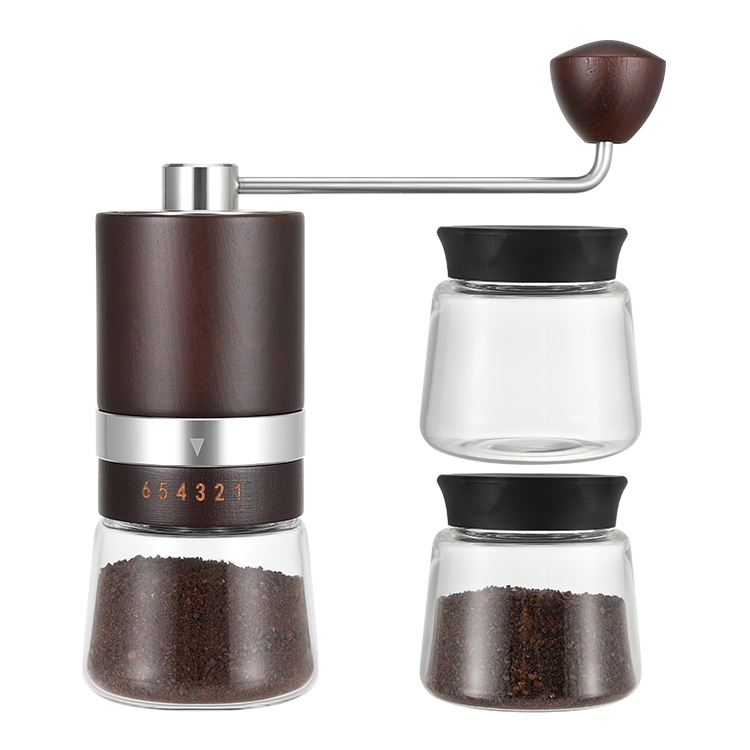
- Burr grinders crush beans between two abrasive surfaces (flat or conical), producing far more uniform particles. Entry-level burr grinders start around $50 and go up to $3,000+ for commercial models.
For filter brewing methods—drip, French press, pour-over, cold brew—a quality burr coffee grinder is entirely sufficient. Espresso, however, raises the bar significantly.
| Type | Description | Typical Use Cases |
|---|---|---|
| Manual Grinder | You turn a handle to grind the beans by hand. | Good for travel, camping, pour over, and French press. |
| Electric Grinder | Uses a motor and a button to grind beans. | Great for daily home use and exact grind settings. |
| Blade Grinder | Has spinning blades that chop beans, but the grind is not even. | Best for quick grinding and casual use. |
| Burr Grinder | Crushes beans between two surfaces for a more even grind. | Used for serious coffee brewing and clear flavors. |
| Flat Burr Grinder | Grinds beans into flakes, but sizes can be uneven. | Good for beginners and is a cheaper choice. |
| Conical Burr Grinder | Crushes beans by squeezing them, making a more even grind. | Used in small coffee shops and for frequent grinding. |
Grind size and consistency
Grind size is very important for taste and how well coffee brews. Coffee grinders and espresso grinders are different in how even they make the grind. Burr grinders make the grind more even, which helps the flavor. Blade grinders make both fine and coarse pieces, so the coffee does not brew evenly. The grind size should match the way you brew coffee. For example:
- French press needs a coarse grind and steeps for four minutes.
- Drip coffee makers use a medium grind for the best taste.
- Pour-over coffee works best with a medium-fine grind.
Changing the grind size can change the taste. Finer grinds make coffee sweeter. Coarser grinds make it less bitter. Knowing these basics helps you pick the right grinder for your favorite way to brew coffee.
Espresso grinder essentials
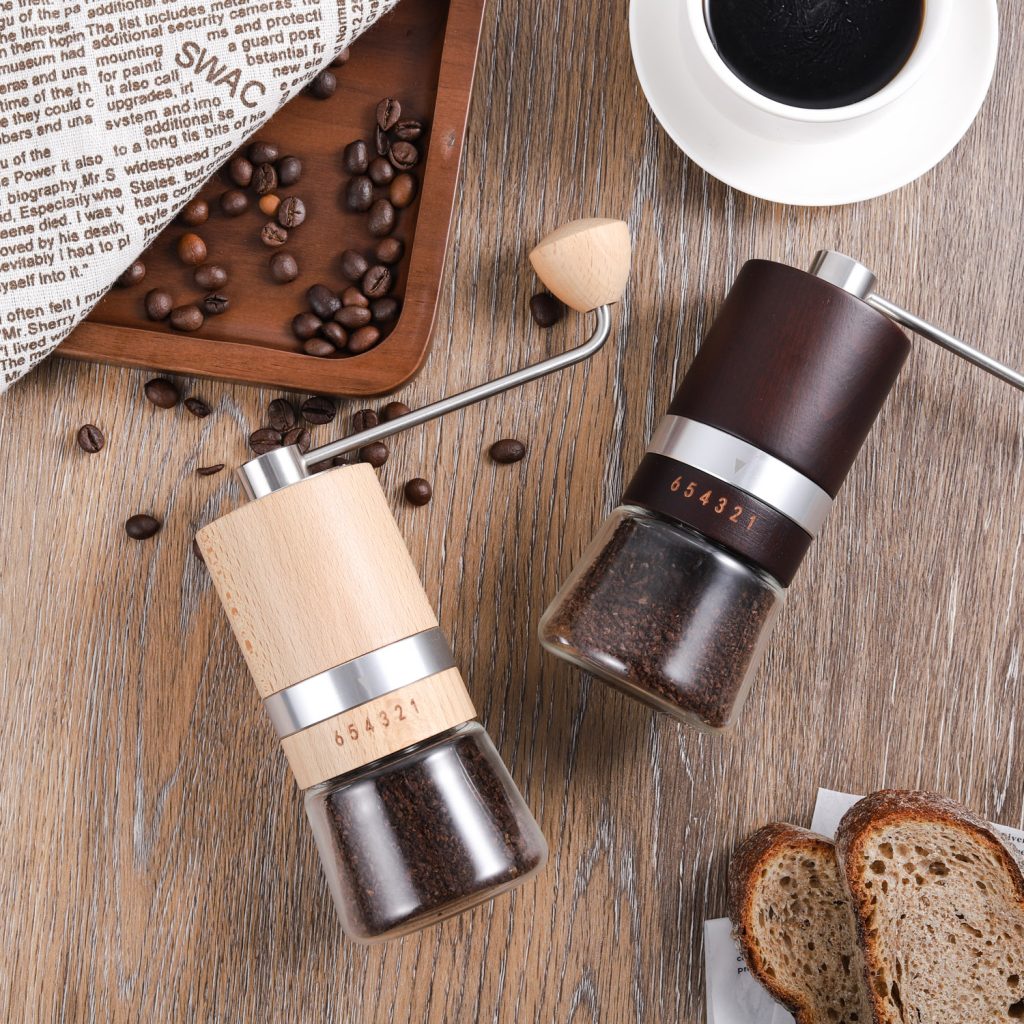
What Makes an Espresso Grinder Different
An espresso grinder is built to solve a physics problem: at 9 bars of pressure, water will find the path of least resistance through a compressed coffee puck. If your grounds aren’t uniformly fine—think powdered sugar consistency—water channels through the weak spots, over-extracting some particles while under-extracting others. The result is a shot that tastes simultaneously sour and bitter.
To prevent this, espresso grinders deliver three things that standard coffee grinders typically can’t:
Higher torque motors: Espresso grinding generates more resistance. Dedicated espresso grinders use motors designed to maintain consistent RPM under load, preventing heat buildup that can scorch the beans during grinding.
Ultra-fine grind range: Targeting 180–380 microns, roughly the consistency of table salt to fine sand.
Stepless micro-adjustment: Instead of clicking between 10–15 fixed settings, stepless grinders let you dial in infinite positions between coarse and fine—critical when a shift of just 50 microns can take a shot from 18 seconds to 30 seconds.
Coffee Grinder vs Espresso Grinder: At a Glance
| Dimension | Coffee Grinder | Espresso Grinder | Why It Matters |
|---|---|---|---|
| Grind size range | 300–1,000+ microns | 180–380 microns | Too coarse = sour shot; too fine = choked machine |
| Adjustment type | Stepped (10–30 clicks) | Stepless (infinite dial) | One click on stepped = 5–8 sec shot time change |
| Burr size | 38–50mm | 55–83mm | Larger burrs = less heat, more consistency |
| Motor design | Optimized for speed | Optimized for low-RPM torque | Prevents stalling and heat damage at fine settings |
| Dosing | Timer or manual | Often grind-by-weight (±0.1g) | 0.5g variance changes espresso flavor noticeably |
| Price range | $20–$500 | $200–$3,500 | Precision gap directly correlates with price gap |
| Best for | Drip, French press, pour-over, cold brew | Espresso, Moka pot, Turkish coffee | Wrong grinder = wasting good beans |
This table illustrates why you can’t simply use a coffee grinder for espresso: the adjustment mechanism alone creates a precision gap that translates directly to cup quality. A stepped coffee grinder set to its finest position might get you in the ballpark of espresso-fine, but without the ability to make micro-adjustments between clicks, you’ll never dial in a shot that extracts properly.
When You Don’t Need an Espresso Grinder
When a Coffee Grinder Is Good Enough
Not every brew method demands espresso-level precision. If your daily driver is a French press, pour-over, drip machine, or cold brew, a quality burr coffee grinder will serve you perfectly well. The extraction window is more forgiving at lower pressures, and the taste difference between a $100 and a $500 grinder for filter coffee is real but subtle—unlike espresso, where it’s night and day.
You can skip the espresso grinder if:
- You only brew filter coffee (drip, pour-over, French press, cold brew)
- You have a pressurized portafilter (it compensates for coarser grinds)
- You’re happy with pre-ground espresso from a quality roaster (vacuum-sealed and used within a week)
How Much Should You Spend?
How Much Should You Spend on an Espresso Grinder?
Espresso grinders span a wide price range, and knowing what each tier delivers helps you avoid overpaying or under-buying.
- Entry-level ($150–$250): Manual grinders like the 1Zpresso J-Max or electric options like the Baratza Encore ESP. Capable of true espresso-fine grinding but with smaller burrs (38–40mm) and stepped adjustment.
- Mid-range ($400–$700): The sweet spot for most home enthusiasts. Models like the DF64 Gen 2 and Eureka Mignon series offer 55–64mm flat burrs, stepless adjustment, and low-retention designs.
- High-end ($1,000–$3,500): Commercial-grade grinders from Mahlkönig, Mazzer, or Weber Workshops. 75–83mm burrs, near-zero retention, and grind-by-weight capability. Noticeable improvement for experienced palates; diminishing returns for beginners.
If you’re just starting with espresso, a $200–$400 grinder paired with fresh beans will get you 80% of the way to cafe-quality shots. Upgrade when your palate outgrows your equipment, not before.
FAQ
Can I use my regular coffee grinder for espresso?
You can try, but the results will almost certainly disappoint. A standard burr coffee grinder tuned to its finest setting will typically produce grounds around 350–450 microns—too coarse for proper espresso extraction. The shot will run fast (12–18 seconds instead of 25–30) and taste thin, sour, and watery. Blade grinders are even worse: their extreme particle inconsistency makes channeling nearly guaranteed.
What happens if I use the wrong grinder for espresso?
Three things: channeling (water finds weak spots and over-extracts some areas while ignoring others), inconsistent shot times (one shot pulls in 20 seconds, the next in 35 with no setting change), and wasted beans. At $15–$25 per pound for quality specialty coffee, the cost of bad shots adds up quickly. Over a year of daily use, wasted beans alone can exceed the price difference between a coffee grinder and a proper espresso grinder.
Why are espresso grinders so much more expensive?
The cost comes from three things: tighter manufacturing tolerances (burr alignment to within 0.01mm), more powerful motors with speed controllers, and precision adjustment mechanisms. A $50 coffee grinder’s burrs might wobble by 0.1mm; a $500 espresso grinder keeps that to under 0.02mm. That 5x precision difference translates directly to shot consistency.