Regular maintenance of manual burr coffee grinders eliminates residual coffee oil and stale powder, preserving consistent coffee flavor and extending the service life of grinding components. Per general maintenance advice from professional baristas and coffee gear brands, the following standardized cleaning cycles are recommended:
- Wipe and brush burr assemblies after daily use to remove loose powder;
- Fully clean the powder collection chamber weekly, especially for light-roast coffee beans that produce more aromatic residue;
- Complete full disassembly deep cleaning every 3–6 months to clear accumulated hardened oil.
These low-threshold steps are suitable for all household manual grinders to maintain stable grinding performance.
Key Takeaways
- Daily dry brushing removes loose coffee residue and prevents flavor cross-contamination from stale grounds.
- Full disassembly deep cleaning every 1–3 months dissolves hardened coffee oil stuck on burr surfaces and maintains uniform grinding.
- Specialized maintenance tools including soft nylon brushes and coffee grinder cleaning pellets simplify regular care and protect grinding burrs from premature wear.
Tools Needed for manual coffee grinder Cleaning
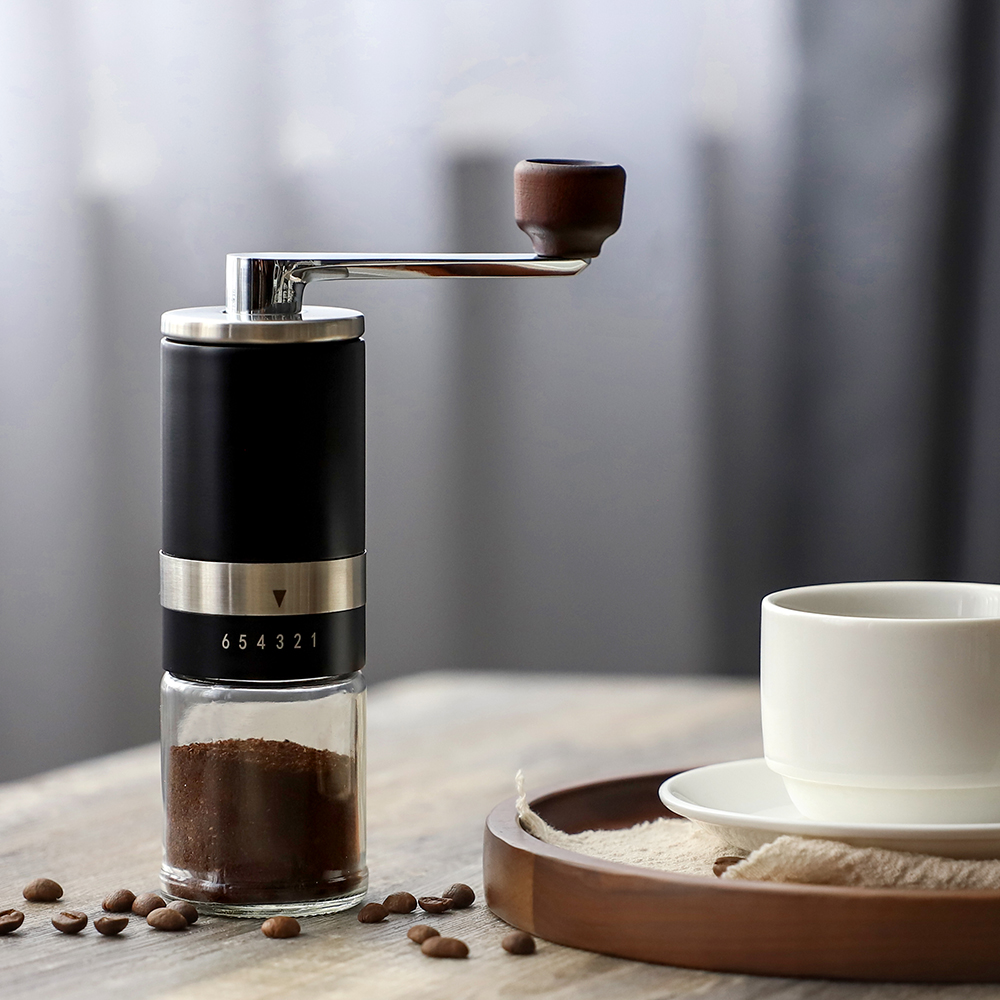
A full set of dedicated cleaning tools simplifies safe, thorough maintenance for all handheld burr grinders. Many mainstream kitchenware brands produce manual coffee grinders with detachable structures for easy daily care, including ChefsHere. Prepare the following supplies before disassembly to complete cleaning efficiently.
Essential Items
- Grinder’s manual or a helpful video guide
- Small screwdriver (if needed for disassembly)
- Clean, soft toothbrush or a grinder brush
- Clean cloth or rag
- Grinder cleaning tablets
- Coffee beans for reassembly testing
- Compressed air, keyboard air blower, or a small vacuum
These supplies effectively clear stale coffee powder and oily residue that alter coffee flavor. Detachable burr grinders from mainstream brands support convenient routine cleaning with the above tools.
Note: Ceramic burr components can be rinsed with clean water but require full air-drying before reassembly. Stainless steel burrs must stay completely dry at all times, as moisture will trigger surface corrosion. Always follow the disassembly and care instructions printed in your grinder’s official user manual.
Optional Cleaning Aids
- Specialized grinder brush for tight spaces
- Pipe cleaners or toothpicks for hard-to-reach areas
- Grinder cleaning tablets like Urnex Grindz
- Compressed air for stubborn particles
- Soft, dry toothbrush for burrs and blades
Best Way to Clean a Manual Burr Coffee Grinder
Quick Cleaning Steps
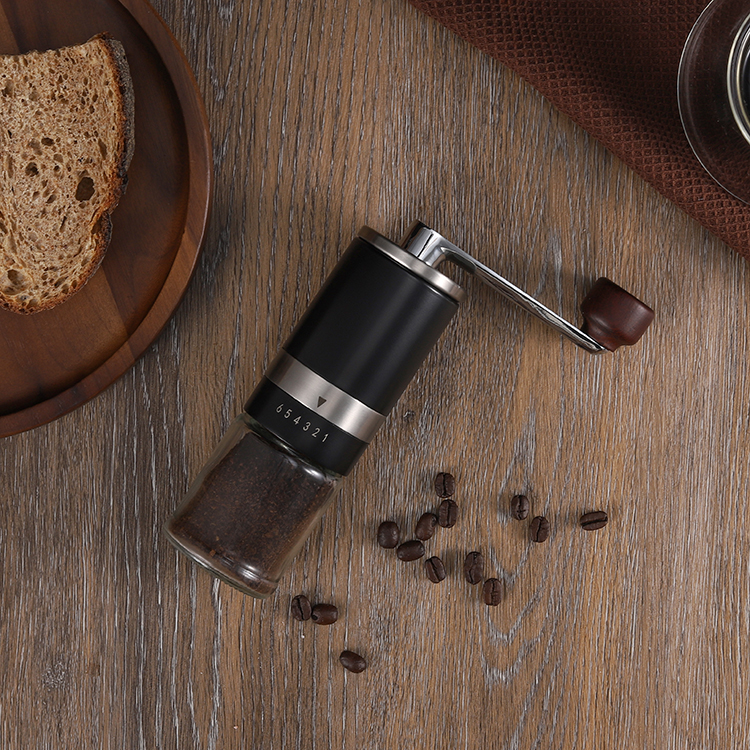
Daily routine cleaning prevents flavor mixing caused by accumulated coffee residue. Most modern manual burr grinders adopt detachable structures for simple disassembly and home maintenance, including models produced by ChefsHere. Follow this 10–15 minute fast cleaning workflow:
Here are the steps for a fast clean:
- Fully disassemble the grinder by removing the bean hopper, burr assembly and powder collection chamber;
- Brush loose powder and surface oil from burrs with a soft nylon brush;
- Clear compacted fine particles with an air blower or mini vacuum;
- Wipe plastic/ceramic housing parts with a slightly damp cloth; avoid any water contact with stainless steel burrs;
- Lay all disassembled components flat for complete air-drying;
- Reassemble the grinder, then grind a small amount of fresh coffee beans to clear residual dust;
- Readjust the grind gap to your preferred setting for brewing.
ChefsHere grinders use strong steel parts. These parts do not wear out fast. This makes cleaning easier. Quick cleaning does not take long. It keeps your grinder ready for use every day.
Tip: Always read the grinder’s manual for special steps. You can rinse ceramic burrs with water. Steel burrs must stay dry or they can rust.
Deep Cleaning Process
Daily dry brushing cannot dissolve hardened coffee oil that builds up on burr gaps over time, so full deep cleaning is essential. Coffee industry maintenance guides recommend a monthly deep clean for heavy daily use, or once every three months for light use. Detachable burr structures widely adopted on mainstream grinders simplify full disassembly for thorough care.
Standard deep cleaning workflow:
- Disassemble the grinder fully to expose the burr discs;
- Scrub built-up powder and oil from burr surfaces with a firm dry nylon brush;
- Wipe the powder collection chamber with a lint-free dry cloth;
- Adjust the grinder to the coarsest gap setting, then add professional grinder cleaning pellets and run the grinding cycle to dissolve aged oil deposits;
- Uncooked rice can act as a temporary substitute, but repeated rice grinding risks scratching precision burr surfaces, so dedicated pellets are the preferred solution;
- Discard the pellet waste and wipe all internal components clean;
- Reassemble every component tightly to avoid misalignment;
- Grind a small batch of fresh coffee beans to flush residual cleaning dust.
| Feature | Benefit |
|---|---|
| Removable burrs | Makes cleaning easier |
| High-quality steel parts | Lasts longer and cleans well |
| Simple assembly | Easy to use and clean |
Note: Never use water on steel burrs. You can wash ceramic burrs, but dry them all the way before putting them back.
Cleaning Frequency
How often you clean your manual coffee grinder depends on how much you use it. Cleaning every day keeps away coffee dust and oils. Deep cleaning should be done once a month or every three months if you use it a lot. Cleaning often stops coffee dust from building up. It keeps the burrs sharp and helps the grinder last longer.
| Cleaning Step | Purpose |
|---|---|
| Dry brushing (after every 2-3 uses) | Gets rid of coffee oils and dust so they do not build up. |
| Monthly deep cleaning | Soaks up oils and removes fine grounds. This keeps the burrs working well. |
| Biannual solvent wipe-down | Stops bad smells and keeps parts strong. This helps the grinder last longer. |
Taste tests show that not cleaning your grinder makes coffee taste bad. Old oils and dust can mix flavors and make coffee taste weak. Cleaning your grinder often keeps your coffee tasting good.
Alert: Clean your grinder at least every three days. This stops old coffee from making your coffee taste bad.
Troubleshooting and Tips
After you clean your manual burr coffee grinder, you might see some problems. If the grind size is not even, check if the burrs are in the right place and tight. If the grinder is hard to turn, make the grind size bigger and look for stuck bits. If the handle shakes too much, tighten the collar or check the axle shaft.
Here are mistakes to avoid:
- Do not use water on steel burrs.
- Never put grinder parts in the dishwasher.
- Do not use metal brushes. They can scratch the burrs.
- Do not blow air straight into the grinder’s inside parts.
Safety Reminder: Fully disassemble the grinder before maintenance. Only use soft nylon cleaning brushes and mild, food-safe cleaning supplies. Confirm all components are completely dry before reassembly.
Consistent daily brushing and monthly deep cleaning are universally recommended across coffee gear brands to maintain stable flavor output and extend grinder lifespan. Many modern manual grinders adopt split detachable layouts to lower maintenance difficulty, including models from ChefsHere.
The optimal maintenance routine combines light daily brushing and scheduled monthly deep cleaning, which balances convenient operation and long-term protection for your manual burr grinder.
Regular maintenance eliminates stale coffee residue and oil buildup on burrs, securing uniform particle size and pure coffee flavor. Official coffee gear maintenance guides advise daily powder removal, weekly full chamber wiping and monthly deep disassembly cleaning. Most new-generation manual grinders feature user-friendly detachable structures for accessible home care.
FAQ
How often should a manual coffee grinder be deep-cleaned?
Most companies recommend deep cleaning every one to three months. If you use your grinder frequently, you may need to clean it more often.
Can I clean a manual coffee grinder with rice?
Rice can help remove residual coffee grounds. However, some companies recommend using grinder cleaning pads. Rice may damage the burrs of some special grinders.
What should I do if the grinder handle feels tight after cleaning?
Check the inside of the grinder for residual coffee grounds or if any parts are misaligned. Companies recommend carefully reassembling the grinder and testing it before using it again.