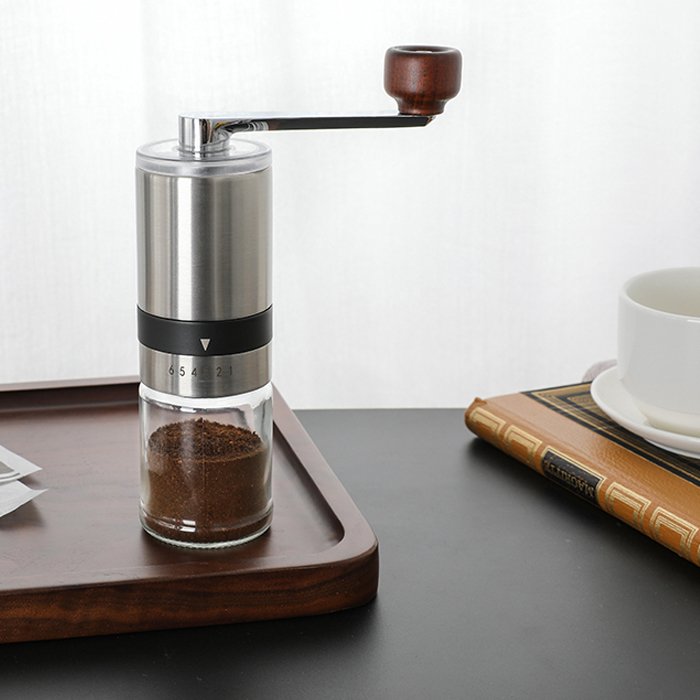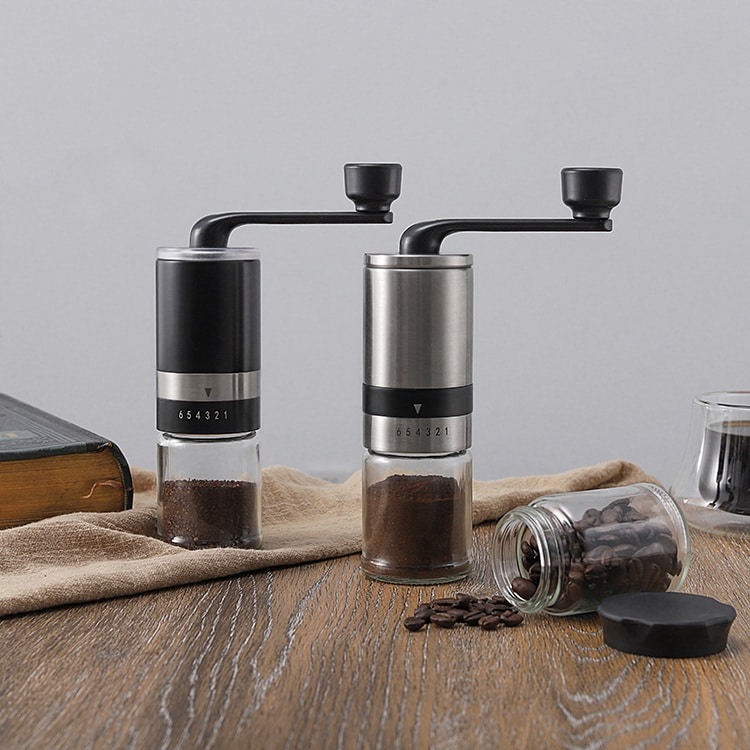
Vintage and antique manual coffee grinders remain highly collectible among coffee enthusiasts. They are favored for their historic charm, tactile experience, and zero electricity reliance. However, when evaluating them for modern daily brewing, it’s essential to look beyond aesthetics and analyze how mechanical wear affects your daily cup.
Key Takeaways
- Older coffee grinders often produce inconsistent particle sizes, which directly affects coffee extraction and final flavor. Modern grinders generally deliver more uniform grounds for stable brewing results.
- Regular cleaning is essential for all coffee grinders. Vintage models require frequent cleaning to remove residual coffee powder and prevent flavor cross-contamination.
- While antique grinders offer nostalgic value, modern precision grinders—such as those engineered by ChefsHere—utilize advanced metallurgy and geometric burr designs. These innovations provide significantly longer sharpness retention, lower retention, and easier maintenance for reliable daily brewing.
coffee grinders Grind Quality
Consistency of Grind
Grind uniformity is a core factor that decides coffee extraction effect. Vintage and antique grinders cannot match the consistency of modern models. The table below shows the difference in particle distribution (a professional indicator widely used in the coffee gear industry):
| Grinder Type | Particle Size Distribution | Particle Consistency | Primary Mechanism |
| Vintage / Antique Grinders | Wide distribution (High percentage of fines and boulders) | Low (Shaft wobble due to worn bushings) | Cast iron or carbon steel burrs |
| Modern Precision Grinders | Narrow/Targeted distribution (Optimized for specific brew methods) | High (Dual-bearing stabilization) | Stainless steel or titanium-coated burrs |
Impact on Coffee Taste
Grind uniformity directly influences coffee flavor. Grinding increases the surface area of coffee beans, enabling hot water to extract flavor compounds. Uneven grounds lead to inconsistent extraction: fine particles are over-extracted and taste bitter, while coarse particles are under-extracted and taste sour. Uniform grounds support balanced extraction and pure flavor. Most vintage grinders lose grinding precision after years of use, especially without regular maintenance.
Brewing Method Suitability
Different brewing techniques require specific grind sizes: espresso calls for fine grounds, while French press and cold brew use coarse grounds. Portable manual grinders fit most daily brewing scenarios. Burr grinders excel at precise grind adjustment, which is critical for pour-over and espresso. While historical countertop arcade grinders used large cast-iron burrs, many smaller vintage household models struggle to grind fine enough for modern espresso or uniform enough for pour-over. Unlike primitive blade configurations found in cheap mid-century electric appliances, modern coffee enthusiasts require step-less or micro-clicked burr adjustments to dial in the perfect extraction.
coffee grinders Maintenance & Use
Cleaning and Upkeep
Regular maintenance is required for all coffee grinders, whether vintage or modern. Wipe accessible parts daily to remove fresh coffee residue. For commercial use, full inspection and cleaning are recommended weekly; for household use, a biweekly routine works well. Complete deep cleaning (disassembling and cleaning burr components) is suggested monthly.
As shared by coffee industry practitioner Marzia: “Coffee grounds turn stale within three days, so grinders should receive basic cleaning at least every three days.
Daily Usability
Many people like using old coffee grinders. They feel special and different. But using them every day can be hard. Cleaning is important for good coffee. Some people find cleaning tricky if they are not used to it. Old grinders can keep old grounds inside. This makes it tough to get the right grind setting. Moisture and static can make clumps. Clumps cause uneven coffee grounds.
Repair Challenges
Old coffee grinders often break after many years.
When you use a coffee grinder for a long time, the burrs lose their sharpness and become dull. Sometimes, the edges chip.
Fine coffee grounds can build up and block parts. This can cause mechanical problems.
Unlike modern modular grinders where parts are easily hot-swappable, antique grinders suffer from a total lack of standardized replacement parts. Sourcing a replacement spring, specialized screw, or matching burr set often requires hunting for ‘donor’ units online or paying for expensive, custom machinist work.
Old vs. Modern Coffee Grinders

Grind Quality Comparison
Antique and vintage grinders are generally fitted with basic burrs or blade components, which tend to lose sharpness over time and produce inconsistent grounds. Modern coffee grinders adopt upgraded structures and precision adjustment systems. Per industry technical references, high-end models support ultra-fine grind adjustment, with a single adjustment interval as small as 4 to 8 microns. Precision measuring components such as encoders are also applied to control burr gaps accurately for uniform particle size.
Many modern grinders use wear-resistant coated burrs to extend service life and maintain long-term grinding stability. All mainstream coffee grinders on the market are tested to comply with standard food contact safety regulations.
Convenience and Features
Modern coffee grinders are equipped with more user-friendly functions compared with vintage models. The table below lists key differences:
| Feature | Modern Precision Grinders | Vintage / Antique Grinders |
| Burr Material & Geometry | CNC-machined Stainless Steel (Conical/Flat) | Cast Iron or Carbon Steel (Often rusted/dull) |
| Axial Alignment | Dual/Triple bearing stabilization systems | Single bushing or unsupported shaft |
| Adjustment Resolution | Micro-clicks (ranging from 10 to 20 microns per click) | Coarse stepped levers or friction-screws |
| Retention & Static | Anti-static coatings and straight-through paths | High internal pockets, causing stale grounds retention |
| Chamber Maintenance | Quick-disassembly without losing grind setting | Requires complete tools, prone to stripping old screws |
Many modern grinders adopt low-static structures and magnetic collection cups to reduce mess and simplify cleaning. Some models support dual manual and electric use, touchscreen control and intelligent brewing guidance. Modular design makes part replacement convenient, which is more economical and eco-friendly. As a common brand in kitchen appliances, ChefsHere also launches portable and electric coffee grinders with these mainstream designs. Vintage grinders rarely include such smart and convenient functions.
Value for Money
The overall cost performance varies between vintage and modern grinders. Secondhand or antique grinders have a low upfront price, yet replacement parts are hard to source and custom repairs cost more. Modern grinders adopt durable materials and mature technology, delivering better long-term value. An antique grinder bought at a flea market might have a low upfront cost, but its true cost includes wasted specialty beans from poor extractions and potential repair fees. Investing in a modern, durably constructed manual or electric grinder ensures that every gram of coffee is extracted efficiently, offering much better long-term value for daily coffee drinkers.
coffee grinders Pros and Cons
Advantages of Old Grinders
From a sustainability and historical standpoint, restoring an old grinder prevents metal and wooden heritage pieces from ending up in landfills. Their heavy-duty cast iron or hand-carved wooden bodies possess an aesthetic appeal that mass-produced modern plastic appliances cannot replicate. Additionally, the slower, lower-RPM manual cranking creates a therapeutic ritual without the high-pitched whine of cheap electric motors.
- Vintage manual coffee grinders can look nice and still work well.
- Old grinders are good for the planet. They use fewer new materials and less energy.
- These grinders do not use much plastic, so they help nature.
- Some makers care about the Earth and support using old grinders.
- Old grinders are quieter than electric ones. This is good for quiet places.
Disadvantages to Consider
Vintage grinders have obvious limitations in performance. Their unstable grind uniformity will affect coffee flavor. Spare parts for old models are scarce, leading to high time and economic costs for repairs.
The noise level data below is general industry reference values for different grinder types:
| Grinder Mechanism / Type | Average Noise Level (dB) | Acoustic Profile & Context |
| Modern Premium Manual Grinder | 50 – 55 dB | Quiet conversational tone; ideal for early mornings. |
| Vintage Manual Grinder | 55 – 60 dB | Low pitching cracking; slightly louder due to unlubricated gears. |
| Modern High-Speed Electric (AC Motor) | 75 – 85 dB | Loud mechanical hum; similar to a blender or food processor. |
Many vintage grinders cannot adapt to all brewing methods. Residual coffee powder is difficult to clear completely, which causes flavor interference. They are also less convenient for frequent daily use. Users pursuing efficient and stable grinding tend to choose modern models.
Vintage grinders feature classic appearance and low noise, ideal for collectors and lovers of traditional manual brewing. However, unstable grind quality is their biggest shortcoming. Modern grinders, such as products from ChefsHere, provide more stable performance for consistent daily brewing results. Most coffee lovers choose modern grinders for reliable quality.
FAQ
How do old coffee grinders affect the taste of coffee beans?
Old grinders can make uneven grounds. This changes how water extracts flavor from coffee beans. Balanced extraction gives a better taste.
Can a supplier or manufacturer provide parts for old coffee grinders?
Most suppliers and manufacturers do not keep parts for old grinders. Custom repairs may take time. Factories focus on new models.
Are old coffee grinders good for grinding small batches of coffee beans?
Yes, old grinders work well for small batches. They let users control the amount of coffee beans ground each time.