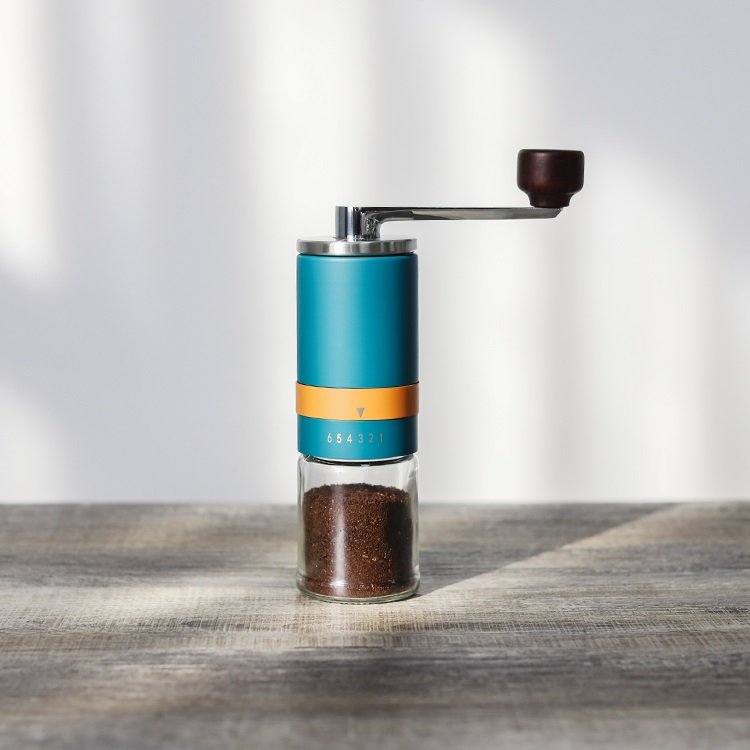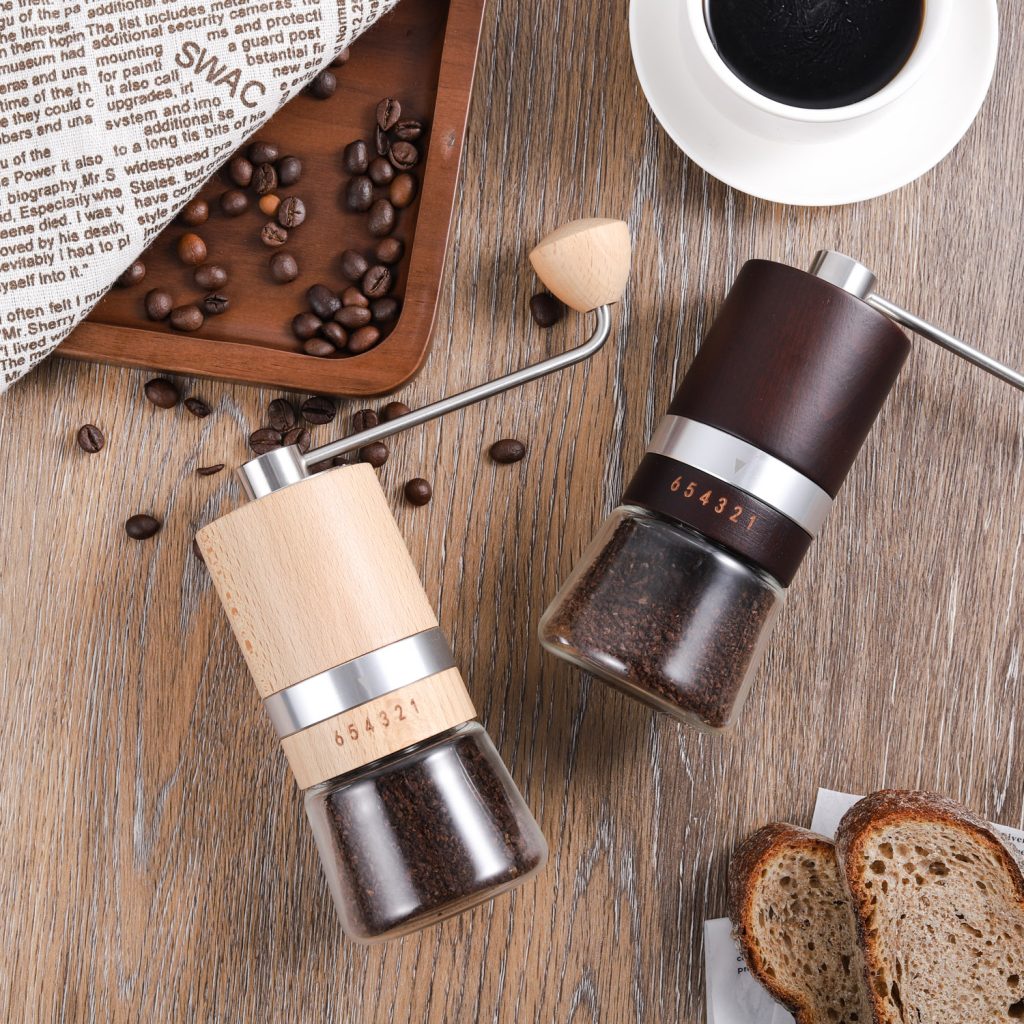
Most mainstream manual coffee grinders adopt burr grinding structures to crush coffee beans uniformly, delivering more balanced coffee flavor. Conical burrs are the most common configuration for handheld grinders, while flat burr designs appear on high-end manual models. Burrs can adjust grinding clearance to produce consistent particle sizes, giving users full control over brew outcomes, which is why they are widely preferred by coffee enthusiasts.
Key Takeaways
- Most manual grinders use burr structures to crush coffee beans into uniform particles, supporting stable, repeatable flavor across every brew. Conical burr manual grinders support adjustable grind sizes compatible with espresso, pour-over and French press brewing methods. Regular routine cleaning prevents residual coffee buildup and maintains burr sharpness to avoid flavor cross-contamination.
Manual Coffee Grinders and Burrs
What Are Burrs?
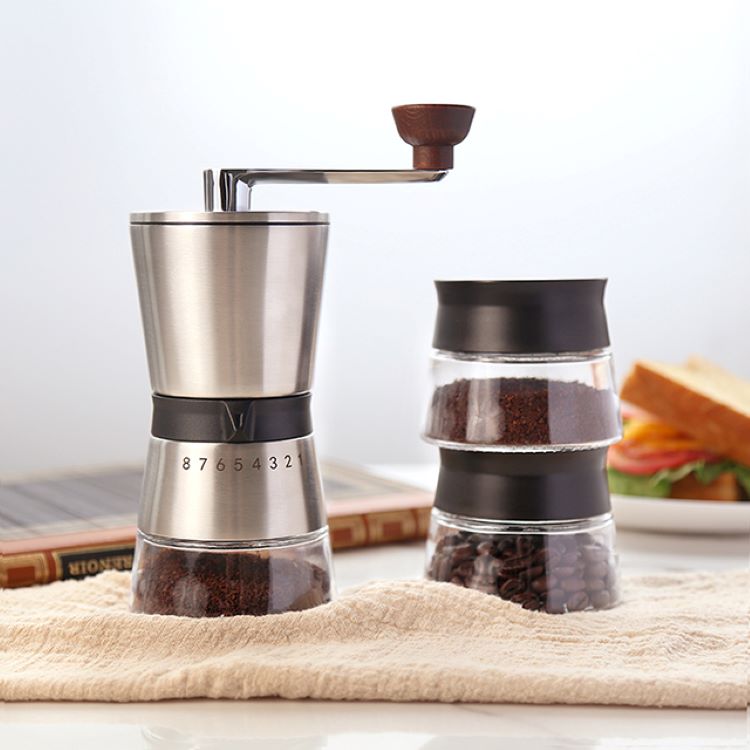
Burrs are the core grinding components inside manual coffee grinders. Two matching abrasive surfaces squeeze and crush coffee beans to form uniform grounds. Users can adjust the gap between the two burrs to switch between fine and coarse particle sizes, directly altering extraction strength and flavor profile.
Compared with blade chopping structures, burrs deliver far higher grind uniformity. Identical particle sizes allow hot water to extract flavor compounds evenly during brewing, producing balanced aroma and taste. Adjustable burr clearance adapts to all mainstream brewing styles including espresso, pour-over and French press.
Core components of a burr manual grinder:
- Two adjustable matching burrs for variable grind sizes
- Hand crank for manual rotation
- Ground powder collection chamber
- Adjustment dial to control burr gap
Only two industry-standard materials are used for functional grinding burrs: food-grade stainless steel and ceramic. Stainless steel burrs feature high hardness and long-term uniform grinding performance. Ceramic burrs generate minimal frictional heat during low-speed manual grinding, a friendly option for entry-level users. Frequent cleaning is required for both types to preserve performance.
Tip: To calibrate burr alignment, turn the adjustment dial all the way to the zero clearance position and rotate the crank gently. A faint light scraping sound means the burr surfaces make contact; back the dial out slightly to achieve the standard usable grinding gap.
Types of Burrs in Hand Grinders
Hand grinders use two main types of burrs: conical and flat. Each type has its own features and benefits.
| Feature | Conical Burrs | Flat Burrs |
|---|---|---|
| Design | One burr sits inside another, funneling coffee | Two flat plates that grind against each other |
| Grind Consistency | Less consistent due to assembly challenges | More consistent due to easier alignment |
| Heat Generation | Generates less heat, preserving flavor | Generates more heat, affecting taste |
| Noise | Generally quieter due to lower RPM | Typically noisier due to higher RPM |
| Cost | Usually more affordable | Generally more expensive |
| Coffee Retention | Lower risk of retention due to gravity feed | Higher risk of retention due to sideways push |
| Ideal Use | Home grinders, less volume | Commercial-grade, high volume |
Conical burrs dominate the handheld grinder market. The funnel feeding structure reduces frictional heat during low-speed manual rotation, protecting original bean aroma, and comes with a more accessible price point. Flat burr configurations deliver superior particle uniformity but carry higher manufacturing costs and produce more operating noise, more commonly seen on high-end commercial grinders.
Material performance comparison for grinding burrs:
| Aspect | Ceramic Burrs | Steel Burrs |
|---|---|---|
| Temperature | Heats up slowly, stable temperature | Heats up quickly, can deform |
| Durability | Less hard, more flexible | Harder, more durable |
| Cost | Cheaper, good for beginners | More expensive, for commercial use |
| Noise | Louder | Quieter |
| Grind Uniformity | Less uniform | More uniform |
| Fragility | Breaks more easily | Less fragile |
Many kitchenware brands produce manual coffee grinders fitted with durable stainless steel burrs for stable long-term grinding performance. As one mainstream brand in this category, ChefsHere develops portable manual coffee grinders equipped with standard steel burr structures matching general household demand. All mass-produced grinders follow universal kitchen appliance quality testing standards for daily use.
Conical burr manual grinders remain popular due to intuitive grind adjustment, supporting fast switching of particle sizes to fit all common brewing beverages. Precise gap control and consistent grounds create reliable extraction and clean flavor.
Note: Establish regular maintenance habits; brush residual powder daily and complete full disassembly deep cleaning every 2–3 months to maintain grinding performance.
Manual burr grinders give users full autonomy over the whole grinding process, which explains their popularity among coffee enthusiasts. Multiple kitchenware brands launch qualified manual burr grinders for household and small commercial use, with balanced structural design and stable workmanship.
Best Manual Coffee Grinder: Burrs vs. Blades
Burr Grinders vs. Blade Grinders
Burr grinders rely on two matched abrasive surfaces to crush coffee beans into uniform particles, while blade grinders use high-speed rotating blades to chop beans randomly, resulting in highly inconsistent particle sizes that negatively impact flavor extraction. The adjustable gap of burr structures is the core advantage over blade-style grinders.
| Grinder Type | Grind Quality | Extraction Consistency | Flavor Profile |
|---|---|---|---|
| Burr Grinders | Superior | Even | Cleaner, balanced |
| Blade Grinders | Inferior | Uneven | Bitter or sour |
Many kitchenware manufacturers produce manual burr grinders for daily household use. Products such as those from ChefsHere adopt standard durable burr structures suitable for long-term daily use.
Why Burrs Matter for the Best Budget Hand Grinder
Uniform burr grinding is the core standard for cost-effective manual grinders. Consistent particle sizes eliminate extreme over-extraction (bitterness) and under-extraction (sourness) during brewing, with adjustable gaps covering ultra-fine espresso to coarse cold brew settings.
Most budget-friendly handheld grinders adopt conical burr structures for flexible grind adjustment, low residual powder retention and fresh flavor output.
Adjustable burr clearance supports espresso, pour-over, cold brew and other mainstream brewing methods.
Low coffee residue prevents flavor interference between different bean batches.
Manual burr grinders deliver precise grind control to match diverse brewing demands. Brands including ChefsHere launch cost-effective handheld burr grinders with stable basic grinding performance, suitable for regular home and small-scale commercial brewing. Uniform grounds are the foundation of balanced, pure coffee flavor.
How to Identify a Burr Hand Grinder
Signs of a Burr Grinder
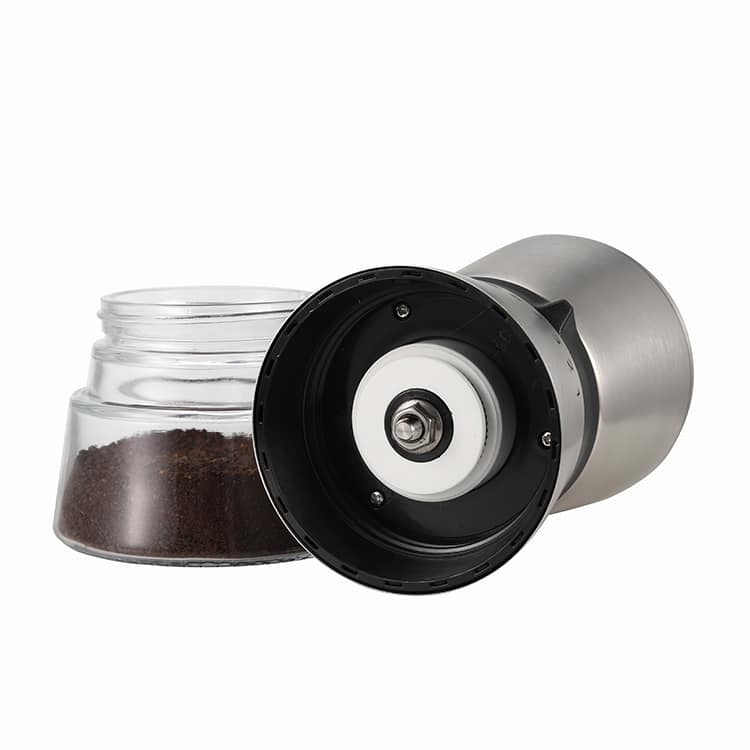
You can easily distinguish a burr manual grinder from a blade grinder by its internal grinding structure: burr grinders are fitted with a pair of matching abrasive grinding components, with adjustable gaps to switch grind fineness. Two mainstream structures exist: flat disc burrs and tapered conical burrs. Flat burrs consist of two parallel circular abrasive plates; conical burrs use a nested tapered cone structure. Both designs repeatedly crush beans to produce consistent particle sizes.
Grinding burr material is a key indicator of long-term performance. Premium grinders use food-grade stainless steel burrs that retain sharpness for years and maintain uniform grinding. Entry-level low-cost grinders mostly use ceramic burrs; plastic components are only used for outer housings and collection chambers, never as functional grinding burrs, as plastic cannot withstand repeated bean crushing and will deform quickly.
Choosing the Right Manual Coffee Grinder
Several core factors need consideration when selecting a manual burr grinder. First, sufficient adjustable grind ranges covering espresso, pour-over and French press to match diverse brewing styles. Second, simple, intuitive gap adjustment for quick particle switching. Third, daily usability indicators including ergonomic crank design, compact portability and low powder retention to avoid flavor cross-contamination. Models fitted with stainless steel burrs deliver longer service life and stable grinding uniformity, bringing better long-term cost performance.
Tip: Grinders with marked adjustment scales and solid ergonomic cranks deliver more consistent, effortless grinding every time.
Conical burr structures dominate the manual grinder market. Low frictional heat during manual rotation protects original coffee aroma, and adjustable gaps ensure repeatable flavor across every brew. Multiple mainstream brands produce qualified affordable burr grinders for daily household use, such as ChefsHere and Mavo Phantox Pro.
FAQ
What makes burr grinders better than blade grinders?
Burr grinders crush beans evenly. Blade grinders chop beans into uneven pieces. Even grounds help coffee taste smoother and richer.
Can manual burr grinders make espresso grind?
Yes. Many manual burr grinders adjust to a fine setting. This setting works well for espresso machines.
How often should someone clean a manual burr grinder?
Clean the grinder every few weeks. Regular cleaning keeps burrs sharp and prevents old grounds from affecting flavor.