People call olive oil containers by various names. Some call them olive oil bottles, while others call them pourers, oil jugs, or sprayers. Each type of olive oil container has its unique purpose in the kitchen. These containers help maintain the freshness of olive oil and allow for better control of the amount used.
Key Takeaways
- Olive oil containers come in many varieties, including bottles, pourers, jugs, and sprayers.
- Choosing a dark or tinted glass container is a wise choice, as it effectively blocks light, keeping the olive oil fresh and delicious for longer.
- Pourers with lids or flip-tops prevent spills and maintain the freshness of the olive oil. This is essential for careful cooking and easy food storage.
- Sprayers help you precisely control the amount used, reducing waste while enhancing the flavor of dishes. They are perfect for healthy cooking.
- It is recommended to clean the containers every two to four weeks to maintain the purity and flavor of the olive oil.
Olive Oil Dispenser Names
Olive Oil Bottles/Dispenser Bottles
Olive oil bottles and dispensing bottles are very important in the kitchen. People use these bottles to store and pour olive oil, which is very convenient. The shape of the bottle helps maintain the freshness of the olive oil and makes it easy to pour or measure the right amount. Some bottles have special nozzles or caps to prevent spills and isolate the oil from air, thus extending its shelf life.
- Olive oil bottles are made of glass, stainless steel, and ceramic.
- Dispensing bottles sometimes have graduations for easy measurement.
- In some places, they are called “oil bottles” or “oil jugs,” especially in Italian cuisine.
Olive oil spray bottles also fall into this category. They spray olive oil into a fine mist, making it easy to spread the oil evenly on salads, bread, or cookware. Using spray bottles avoids waste and prevents food from becoming too oily. Many people consider these bottles best suited for everyday use.
Pourers/Pour Spouts
Pourers and oil sprinklers are attached to the top of oil bottles to help control the flow of oil, making pouring easier and preventing spills. Many sprinklers have vents to allow the oil to flow smoothly. Chefs use pourers to avoid adding too much oil. Some sprinklers have automatically closing baffles or caps to maintain the freshness of the oil and prevent dust from entering.
Tip: Choose an oil pourer with a baffle or cap to keep the oil fresh and the kitchen clean.
The table below lists the various types of oil pourers and their functions:
| Type of Pour Spout | Features and Benefits |
|---|---|
| Basic Spouts | Simple, cheap, good for everyday use |
| Spouts with Flaps | Flap closes by itself, keeps oil fresh |
| Tapered Spouts | Slow, careful pour, good for fancy dishes |
| Measured Pour Spouts | Gives set amounts, helps with portions |
| Spouts with Air Vents | Smooth flow, stops glugs and splashes |
Oil Decanters/Carafes
Olive oil decanters and glass bottles are another way to store and preserve olive oil. These containers are aesthetically pleasing and commonly used on family tables or in restaurants. People use decanters to hold olive oil and drizzle it over bread or salads. Glass bottles are wide at the bottom and narrow at the neck. This shape makes it easy to pour and control the amount of oil. In some places, these containers are called “seasoning bottles.” Many people choose them because they are both beautiful and practical.
Oil Sprayers/Misters
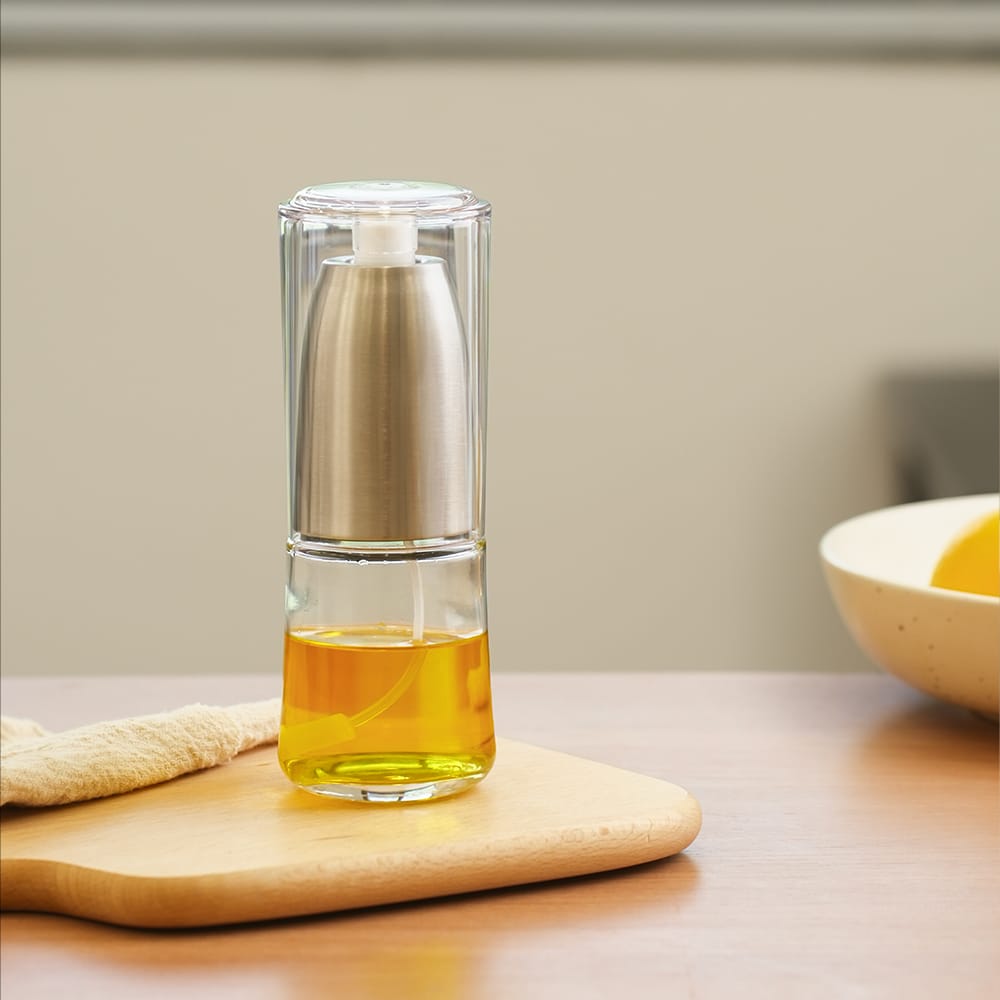
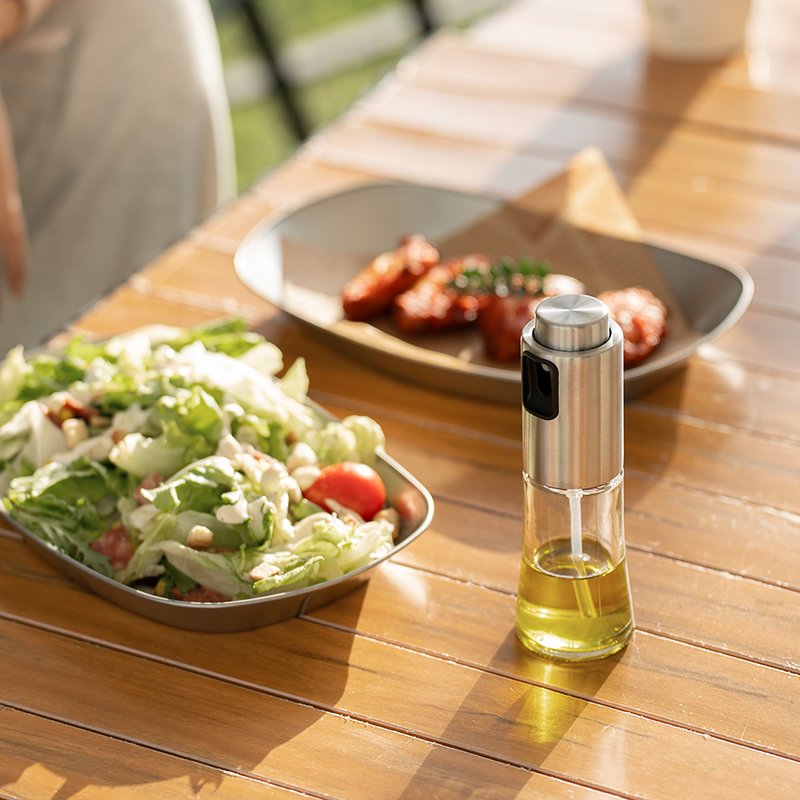
Oil sprayers and aerosol sprayers differ from other olive oil containers. They spray the oil into a mist, helping to control the amount of oil on food. This is perfect for grilling, baking, or adding a small amount of olive oil to salads. Oil sprayers come in various types, such as trigger-type, electric, or manual pump-type. Each type has its own advantages.
Oil sprayers and aerosol sprayers do not use chemicals or gases such as aerosol cans. They ensure the safety and purity of the cooking oil. Many chefs consider oil sprayers an excellent choice for healthy eating. These tools help reduce the amount of oil used and add flavor without waste.
Note:Oil sprayers are especially suitable for cooking oils containing garlic, chili, or herbs. They spray the flavor evenly, preserving the freshness of the food.
Many kitchens are equipped with more than one type of oil dispenser. One might have an oil bottle for storage, a pourer for cooking, an oil container for holding the oil, and a sprayer for final application. Choosing the right olive oil dispenser depends on your needs and preferences.
Types of Olive Oil Dispensers
Cruet/Bottle Dispensers
Olive oil bottles and condiment bottles are common containers for olive oil. Glass bottles allow you to see the oil inside. Metal and ceramic bottles provide light protection and ensure the safety of the olive oil. Most condiment bottles have long spouts for easy pouring. Some condiment bottles have curved spouts for better control. The table below lists the differences between condiment bottles and stopper-type pourers:
| Feature | Cruets | Bottle-Stopper Pourers |
|---|---|---|
| Material | Glass or metal, sometimes ceramic | Fits into any bottle, often used with wine |
| Spout Design | Long, thin, often with a slight curve | N/A |
| Functionality | Easy pouring with a spout | Allows decanting from larger containers |
| Protection | Protects oil from light, oxygen, moisture | N/A |
Oil Misters/Sprayers
Oil mist sprayers and atomizers help control the amount of oil used. They atomize the oil, making them ideal for salads and baking. These oil containers are reusable and environmentally friendly.
Bottle-Stopper Pourers
Bottle stopper oil pourers insert into the bottle neck. They allow you to pour oil from a large bottle into a smaller one. Most bottle stopper oil pourers are made of metal or silicone. These pourers are easy to use and help control the amount of oil used. They are also convenient for refilling glass or ceramic oil containers.
Pour Spout Types
Pour spouts come in a variety of shapes. Some are made of plastic, making them lightweight and inexpensive. Weighted pour spouts prevent spills and keep the oil clean. Flip-top pour spouts prevent dust from entering. Conical pour spouts allow for precise control. Silicone pour spouts are flexible and easy to clean. Built-in pour spouts are drip-free and ready to use out of the box.
| Type of Pour Spout | Advantages |
|---|---|
| Plastic Pour Spouts | Cheap, light, easy to clean, good for everyday use. |
| Weighted Pour Spouts | Stops spills, keeps oil safe, good for busy kitchens. |
| Flip-Top Pour Spouts | Keeps oil fresh, easy to use with one hand, blocks dust. |
| Tapered Spouts | Lets you pour slowly, good for cooks who need control. |
| Silicone Pour Spouts | Bendable, heat safe, easy to clean, needs little care. |
| Built-in Spouts | Ready to use, no drips, easy to pour, simple design. |
Features of Olive Oil Dispensers
Dark/Tinted Glass
Many people choose dark or tinted glass bottles to store olive oil. This type of glass blocks up to 99% of harmful UV rays. When olive oil is stored in a transparent container, sunlight can trigger a chemical reaction. This reaction can cause the olive oil to taste bad and lose its nutritional value.
Drip-Free Spouts
A good spout design is crucial for the effectiveness of an olive oil bottle. Drip-proof spouts use a special edge or lip design to guide the olive oil to flow smoothly. This design prevents the olive oil from running down the side of the bottle. It also helps control the flow, allowing the cook to precisely dispense the right amount of olive oil. Many glass oil dispensers use this design to keep countertops clean and save oil. The table below illustrates the advantages of drip-proof nozzles:
| Feature | Description |
|---|---|
| Precision Lip Design | The rim has a carefully angled edge that guides the flow of oil smoothly, preventing it from running down the side of the bottle. |
| Controlled Flow | Enables a fine, steady stream—perfect for evenly coating pans, drizzling over salads, or finishing dishes with elegance. |
| Reduced Waste | By eliminating unwanted drips and spills, this design helps conserve oil and keeps countertops clean. |
| Ease of Use | Especially beneficial when using expensive or artisanal oils where every drop counts. |
The drip-proof spout also makes the oil bottle easy to clean. Users don’t need to wipe the bottle after each use. This feature enhances ease of use and keeps the kitchen tidy.
Ventilation Holes
Ventilation holes are small holes on the spout. These holes allow air to enter the bottle when pouring oil. This design prevents gurgling or splashing when oil flows out, helping to maintain a steady and even flow.
A glass dispenser with air vents is easy to clean and use. Many cooks like this feature because it gives them better flow control and keeps their cooking smooth.
How to use an olive oil dispenser
Home Kitchen
People choose kitchen oil dispensers based on style and intended use. Many people prefer manual pump oil dispensers because they are aesthetically pleasing and comfortable to hold. These dispensers help you precisely pour oil where needed, making cooking easier and healthier.
The table below lists the best uses for different oil dispensers in different settings:
| Type of Dispenser | Preferred Setting | Key Features |
|---|---|---|
| Manual Pump Dispensers | Home Kitchens | Comfortable design, looks nice, good for fancy cooking |
| Automatic Sensor Dispensers | Commercial Kitchens | Used a lot, fast, not focused on looks |
People with home kitchens want oil dispensers that are easy to use and clean. They also want them to match the kitchen’s style and be easy to refill. Many choose glass or ceramic oil dispensers because they look nice and help keep the oil fresh.
Restaurant Environment
estaurants need oil dispensers that dispense oil quickly and have a large capacity. Staff use automatic sensor oil dispensers or bottle-stopper dispensers. These types of dispensers allow them to pour oil quickly and keep the kitchen clean during busy times. In restaurants, speed and good performance are more important than appearance. Stainless steel and plastic oil dispensers are popular because they are durable and easy to clean.
Many chefs use vented spouts to control the amount of oil and prevent waste. These features help measure oil and ensure the kitchen operates efficiently. Price is critical in restaurants, so restaurant managers will choose robust, durable oil dispensers suitable for high-intensity use.
Choosing the right olive oil dispenser depends on your usage scenario. Home chefs prioritize aesthetics and operability. Restaurants need speed and durability. Both require oil dispensers that are easy to use, easy to clean, and offer good value for money.
Olive oil dispensers have various names, such as bottles, pourers, decanters, or sprayers. Each type has its unique purpose. Choosing the right dispenser is crucial. The table below lists the types of olive oil and their characteristics:
| Type of Olive Oil | Description |
|---|---|
| Extra virgin | No more than 0.8% acidity |
| Virgin | 0.8% to 2% acidity |
| Olive oil | Refined and virgin olive oils |
| Olive-pomace oil | Not specified in detail |
FAQ
What is the best material for olive oil bottles?
Glass, stainless steel, and ceramic are all good choices. Glass allows users to see the amount of oil inside. Stainless steel and ceramic provide light protection, keeping the oil fresh. All three materials are durable and easy to clean.
How often should olive oil bottles be cleaned?
It is recommended to clean them every two to four weeks. Regular cleaning prevents oil buildup and maintains the pure flavor of the olive oil.
Can other cooking oils be stored in the same bottle?
Yes. Many bottle types are also suitable for vegetable oils, rapeseed oil, or avocado oil. Clean the bottle before changing oils to prevent cross-contamination of flavors.
Why are some bottles made of dark or tinted glass?
Dark or tinted glass blocks sunlight, preventing the olive oil from spoiling and helping to preserve its flavor and nutrients for longer.